Clever Men by Martin Thomas
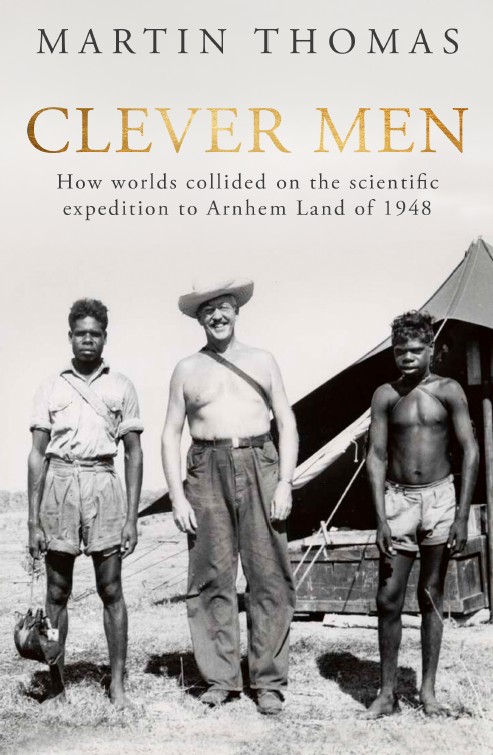
In the dying days of the Second World War, Charles Mountford, a telephone mechanic turned amateur anthropologist from Adelaide, was funded by National Geographic to lead an expedition that would see Australian and American scientists travelling to the Aboriginal reserve of Arnhem Land in 1948. Their purpose was to study the local people, their culture, and the natural environment. While Mountford later claimed that this was the ‘biggest scientific expedition in history’, things quickly went wrong. The barge carrying essential equipment got stranded. Fights broke out among the scientists, one of whom described the expedition as ‘one of the greatest fiascos perpetrated in modern times.’ Senior Indigenous elders, including the spiritual leaders or shamans known as ‘clever men’, were puzzled and disturbed by the intrusion of these scientific ‘experts’. As relations turn toxic within the expedition, certain members of the party begin to steal bones from Indigenous mortuary sites. They would be taken to the Smithsonian Institution in the United States, causing hurt and controversy that festered for more than sixty years